THE HOBBY MOVED FORWARD. THE TOOLS NEED TO CATCH UP.
BUILT FOR THE WAY COLLECTORS ACTUALLY COLLECT.
Every card has a story. An identity. A specific version. Details that make it different from the hundreds of others that might look almost exactly like it.
And for collectors, those details matter.
You rip a pack. You pull something incredible. The excitement hits.
Then comes the part nobody looks forward to.
Is it the base card? A parallel? Which parallel? Is that a Refractor, a Wave, or something else entirely?
Suddenly, you're zooming into photographs, digging through checklists, comparing listings, searching sold prices, and trying to piece together information that should have been easier to find in the first place.
And even after all that research, you're left wondering if you've actually got the right answer.
How is this still so complicated?
That's the problem we're setting out to challenge.
BreakpointX is being built to bring the collecting experience together.
From identifying a card and understanding the details that make it unique, to exploring real market activity, organizing the physical cards you own, and preparing them for whatever comes next.
One connected platform for Sports and TCG collectors, designed around how people actually collect.
But bringing everything together is only half the battle.
The information has to be worth trusting.
A wrong identification isn't just a small mistake. Confusing one parallel with another can affect the value you're researching, the information you record, and the decisions you make about your collection.
That's why we're taking a different approach to recognition.
We're developing technology designed to examine visual evidence, distinguish between similar card versions, and explain the details behind an identification—not simply return a confident-looking answer.
And when the evidence isn't enough to make that distinction?
We'd rather acknowledge what we don't know than confidently tell you something that's wrong.
But we don't want BreakpointX to stop at being careful.
Every difficult card is a chance to get smarter. But at BreakpointX, knowledge isn't built on guesses. It's earned through evidence, challenged through review, and strengthened through testing.
We're building toward a system that can identify where its knowledge falls short and improve future recognition.
Not just technology that identifies cards.
Technology designed to learn, evolve, and get better at understanding them.
We're not claiming to have solved every challenge in collecting. We're building, researching, testing, and pushing toward something better.
Because collectors shouldn't have to become detectives just to understand what they own.
They deserve technology that understands why the details matter.
And that's where BreakpointX begins.
BEYOND THE SCAN
LOOKS CAN BE DECEIVING. DETAILS DON'T LIE.
Two cards. Same player. Same photograph. Same design.
At first glance, they're identical.
But in this hobby, what you don't notice can matter just as much as what you do.
A subtle foil pattern. A different Refractor treatment. A serial number tucked into the corner. A variation so small that even experienced collectors have to stop and look twice.
One overlooked detail can mean the difference between an ordinary base card and a rare parallel.
And yet, collectors are still left staring at photographs, comparing listings, questioning scanner results, and wondering whether they've actually identified the card in front of them.
That shouldn't be the standard.
Recognizing a player is one thing. Reading a card number is another.
But identifying the exact card, the correct version, the right parallel?
That's an entirely different challenge. And that's the challenge BreakpointX is being built to take on.
We're developing a recognition system designed to go beyond what's obvious.
To examine the physical evidence visible in a photograph. To recognize meaningful differences in patterns, finishes, and card characteristics. To connect those observations with product information, checklist intelligence, and other relevant evidence.
Not just to find a card that looks similar.
To work toward identifying the card you're actually holding.
And here's where we believe the standard needs to change.
An answer isn't valuable just because a scanner delivers it confidently. It has to be worth trusting.
We want BreakpointX to do more than put a name on your screen.
We want it to help you understand why an identification makes sense. What details support it. What separates your card from similar versions. And what evidence might still be missing.
Because sometimes the photograph isn't enough.
So what happens when the system can't tell?
It shouldn't make something up.
It shouldn't turn uncertainty into a convincing answer just to make the scan feel successful.
And it certainly shouldn't treat a guess as a verified identification.
It should know when to look closer.
Ask for another angle. Narrow the possibilities. Explain what's missing. And when the evidence still isn't strong enough, have the intelligence to say so.
That's the kind of recognition technology we're working toward.
One that can investigate instead of simply predict. One that can learn from carefully validated discoveries, confront its mistakes, and become more capable as its understanding grows.
Because getting the player right but the parallel wrong isn't getting the identification right.
We're not building BreakpointX to be another scanner that looks impressive while leaving collectors to figure out whether its answers are correct.
We're building it to challenge what card identification technology should be capable of.
Recognizing a card is the starting line.
Knowing exactly what you're holding? That's the standard we're chasing.


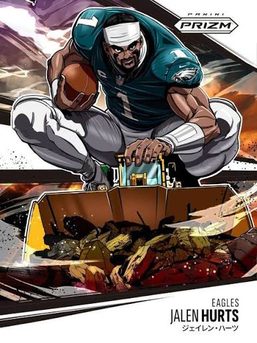


YOUR COLLECTION. YOUR LEGACY.
MORE THAN INVENTORY. IT'S YOUR COLLECTION.
Every collector knows the feeling.
You pull a card you've been chasing for months. You finally track down that missing parallel. You find something incredible tucked away in a bargain box.
And just like that, another card becomes part of your collection.
But over time, something happens.
A few cards become hundreds. Hundreds become thousands. Some get graded. Some get sold. Others disappear into boxes you haven't opened in years.
And suddenly, a collection you've spent years building becomes something you can barely keep track of.
Sound familiar?
We think that's a problem worth solving.
Introducing Vault. BreakpointX's connected collection experience.
We're building Vault to give collectors a place to organize, understand, and manage the cards they actually own.
Not just a list of player names and pictures.
A collection built around the individual cards in your possession.
Each copy can have its own condition, history, purchase information, and story.
Those differences deserve to be remembered.
Our vision is to connect the entire collecting experience.
Identify a card. Add it to your collection. Record the details that matter. Explore relevant market activity. Keep track of what you own, what you've sold, and how your collection changes over time.
Sports and TCG, together in one place.
And as BreakpointX grows, we want the information you've already collected to become more useful—not something you have to rebuild every time you need a different tool.
Because a collection should be more than a digital checklist.
It should be something you can actually explore, understand, and manage with confidence.
Whether you're collecting your favorite player, building an entire set, chasing rare parallels, or preparing cards for sale, Vault is being designed to help you stay connected to what matters.
You put the time, money, and passion into building your collection.
We're building the technology to help you make the most of it.




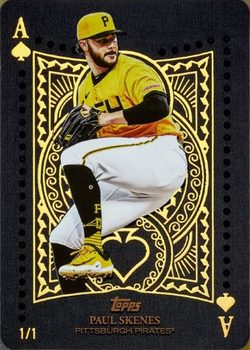
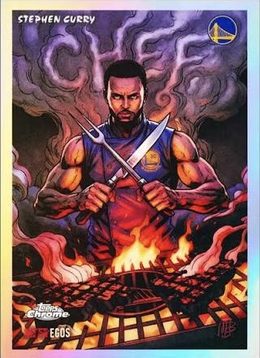
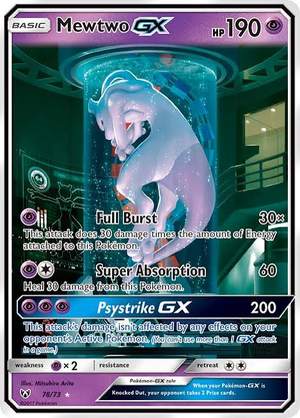




BEYOND THE PRICE TAG
ASKING ISN'T SELLING. EVIDENCE MATTERS.
You pull a card. You know it's something special.
Naturally, the next question is pretty simple.
What's it worth?
So you start searching.
One seller has it listed for $500. Another wants $250. Someone else thinks theirs is worth $1,000.
Three different prices. Same card.
And somehow, you're supposed to figure out which one to believe.
Here's the problem. Anyone can ask whatever they want for a card. That doesn't mean someone is willing to pay it.
In a hobby where prices can change quickly, understanding the market requires more than finding a few listings and averaging the numbers.
It requires context.
What have comparable cards actually sold for? When did they sell? Were they the same parallel? The same version? Were they graded, or raw? And how relevant are those sales to the card you're holding?
Because a price without context is just another number.
That's where BreakpointX wants to change the experience.
We're building market research tools designed to connect collectors with actual sales evidence, relevant comparisons, and clearer information about the market surrounding their cards.
Not just a number on a screen.
The evidence behind it.
We want collectors to explore sales chronologically, understand why certain comparisons matter, and recognize when the available market information is too limited to support a reliable estimate.
And we're taking that vision further with BPX Value.
Our goal is to develop an intelligent estimate informed by relevant market evidence, card identity, and other meaningful factors.
But BPX Value isn't meant to be a crystal ball, a guaranteed selling price, or a replacement for actual market activity.
It's meant to help collectors make sense of that activity.
And as our market intelligence develops, we want BreakpointX to become better at distinguishing useful evidence from misleading comparisons.
Because identifying the right card is only the beginning.
Understanding what the market actually says about it? That's an entirely different challenge.
We're building toward a collecting experience where you don't have to blindly trust a number.
You can explore the evidence, understand the context, and make your own decisions.
The market tells a story.
BreakpointX is being built to help you read it.
YOUR VAULT. YOUR CARDS. YOUR NEXT MOVE.
YOU DID THE COLLECTING. WHY START FROM SCRATCH?
Finding the card was exciting. Identifying it took some work. Researching its value took even more.
And now you've decided to sell it.
Simple enough, right?
Not always.
Now you're back to figuring out the exact card title, checking the parallel, finding the right product details, researching prices, organizing photographs, and making sure the information in your listing is actually correct.
Didn't you already do most of this?
That's one of the frustrating disconnects we're looking to eliminate.
BreakpointX is being built to connect the cards you own with the process of selling them.
Through Vault, our goal is to make the information you've already gathered about a card useful when you're preparing it for sale.
Its identity. Its specific parallel. Its individual condition details. Its history in your collection. Relevant market evidence.
Instead of forcing collectors to start with a blank listing every time, we want BPX to help bring that information together into a more organized selling workflow.
Because the work you put into understanding your collection shouldn't disappear the moment you decide to sell something.
And accuracy matters here, too.
A listing with the wrong parallel, an incorrect description, or a misleading comparison doesn't just create confusion. It can create problems for both the buyer and the seller.
That's why our approach starts with something we've already made a priority throughout BreakpointX.
Get the card right. Then build from there.
We're developing toward a connected selling experience designed to work with multiple marketplace platforms as BreakpointX evolves.
Not to take control away from collectors.
But to give them better tools, more organized information, and a smoother path from ownership to a potential sale.
The collector stays in control of what gets listed, how it's described, and the price they're willing to accept.
Your Vault shouldn't be a dead end. It should be your starting point.
When it's time to sell, the knowledge you've built around a card should move with you.
No digging through old research. No rebuilding information you've already recorded. No starting from zero every time you want to make a move.
From the card in your Vault to the listing you stand behind.
That's the connected collecting experience we're building toward.